

Introduction: Why Mobility is Crucial in Modern Raiding
World of Warcraft’s raid mechanics have evolved dramatically over the years, with movement-heavy encounters becoming a defining feature of high-end PvE content. While raw damage, healing throughput, and defensive cooldowns remain essential, how well players handle movement mechanics often determines success or failure in challenging encounters.
Mobility isn’t just about running from point A to point B—it’s about positioning efficiently, dodging mechanics seamlessly, and maintaining uptime while on the move. Some classes excel at constant repositioning, while others must manage their limited mobility tools carefully to avoid losing precious DPS, healing, or survivability.
Understanding WoW class mobility in raids is essential for every raider. Knowing how to move efficiently while maintaining maximum performance can separate a top-tier player from an average one.
How Raid Encounters Challenge Player Mobility
1. The Shift Toward Movement-Based Mechanics
In early WoW expansions, raid bosses were relatively static, and movement requirements were minimal. However, over time, Blizzard introduced increasingly complex movement mechanics that force players to reposition constantly.

Modern raids feature:
- Persistent environmental hazards, requiring players to navigate the battlefield while still executing their rotation.
- Knockback and displacement mechanics, forcing players to adjust positioning mid-fight.
- Targeted movement abilities, where players must spread out, stack, or bait mechanics to specific locations.
The result? Mobility has become just as important as damage output, healing efficiency, and defensive cooldown management.
How Different Classes Handle Movement Mechanics in Raids
2. Mobility Strengths and Weaknesses by Class Type
Each class in WoW has different mobility tools, making some specializations better suited for movement-intensive fights than others.
- Highly mobile classes (e.g., Demon Hunters, Hunters, Monks) can reposition effortlessly, maintaining uptime while dodging mechanics.
- Limited mobility classes (e.g., Warlocks, Priests, Death Knights) must plan their movement carefully to avoid losing DPS or healing output.
- Hybrid mobility classes (e.g., Mages, Rogues, Shamans) have a mix of movement tools but require strategic usage to be effective.

Each raid encounter challenges different mobility levels, requiring players to optimize their movement strategy to maintain efficiency.
Optimizing Positioning in Movement-Heavy Encounters
3. Anticipation: The Key to Efficient Movement
The best raiders move preemptively, avoiding unnecessary movement by positioning intelligently before a mechanic occurs.

For example:
- A melee player anticipating a knockback can position near a wall to reduce movement time.
- A caster expecting a movement phase can reposition early to avoid interrupting their rotation.
- A healer aware of a spread mechanic can pre-move to maximize healing coverage.
By studying boss abilities and movement patterns, players can minimize wasted movement and maintain high uptime.
4. Using Class Abilities to Minimize Downtime
Every class has movement abilities that, when used correctly, can prevent damage loss.
- Blink (Mage), Fel Rush (Demon Hunter), and Transcendence (Monk) allow instant repositioning.
- Spiritwalker’s Grace (Shaman) and Angelic Feather (Priest) help maintain healing output while moving.
- Demonic Circle (Warlock) and Gateways offer strategic movement options for the entire raid.
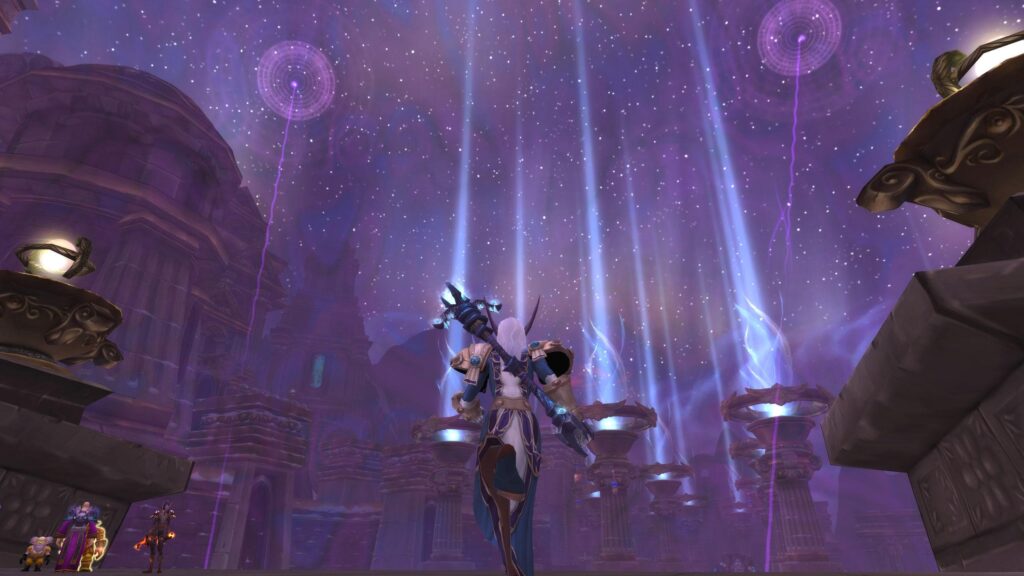
By understanding how and when to use movement abilities, players can reduce the negative impact of forced movement mechanics.
5. Talent and Gear Choices That Improve Mobility
Many classes have talent choices or gear effects that improve movement speed or reduce downtime.
- Mages can take Shimmer instead of Blink to allow movement while casting.
- Paladins can talent into Cavalier for an extra Divine Steed charge.
- Legendary items, trinkets, and gear bonuses often provide movement speed increases.
Understanding how talents and gear affect mobility can drastically improve performance in movement-intensive fights.
Movement in Raid Roles: Tanks, Healers, and DPS Considerations
6. Tanks: Mastering Positioning for Boss Control
Tanks have a unique mobility challenge, as their movement dictates how the rest of the raid positions.
- Kiting mechanics require precise movement to keep enemies in controlled positions.
- Facing mechanics mean tanks must carefully adjust positioning to avoid cleaving the raid.
- Mobility cooldowns must be used wisely to avoid unnecessary damage intake.
A well-positioned tank ensures the raid can move efficiently, reducing unnecessary damage and movement loss.
7. Healers: Balancing Movement with Healing Uptime
Healers must often move while continuing to heal, making mobility even more critical.
- Instant-cast abilities allow healers to remain effective during heavy movement phases.
- Positioning near raid groups minimizes excessive movement.
- Using movement cooldowns like Spiritwalker’s Grace ensures uninterrupted healing output.
Understanding when to preposition and when to move reactively allows healers to keep the raid alive without losing throughput.

8. DPS: Maximizing Uptime While Avoiding Mechanics
DPS players are often the most affected by movement-heavy mechanics, as losing uptime directly impacts raid success.
- Ranged DPS must use mobility spells efficiently to minimize lost casts.
- Melee DPS must adjust movement to avoid cleaves and ground effects while staying within range.
- Certain DPS specs have movement-based bonuses (e.g., Hunters’ Aspect of the Cheetah) to maintain damage output.
By balancing damage uptime with mobility needs, DPS players ensure they contribute fully to the raid without dying to movement-based mechanics.
The Future of Mobility in WoW Raiding
9. How Blizzard Continues to Evolve Movement Mechanics
With each expansion, Blizzard introduces new movement-based mechanics that challenge players in fresh ways.
- Denathrius in Castle Nathria forced players to navigate a shifting battlefield while handling phase transitions.
- Raszageth in Vault of the Incarnates introduced high-movement knockback phases requiring rapid repositioning.
- Upcoming bosses in The War Within will likely push mobility even further with dynamic arena shifts and forced repositioning mechanics.
As WoW raids continue to evolve, mobility will remain a critical factor in determining raid success.
Mastering Movement in Specific Raid Encounters
While understanding mobility in general is important, different raid encounters require different movement strategies. Some fights require fast dodging, others require precise positioning, and some force players to move constantly while still performing their rotation. The key to excelling in raid movement is recognizing the patterns and mechanics unique to each encounter and adapting accordingly.
1. Predicting Movement Mechanics Before They Happen
One of the most overlooked aspects of movement in raids is preemptive positioning. Many players react too late to mechanics, resulting in damage loss, wasted mobility cooldowns, or even death. The best raiders know how to position themselves optimally before a mechanic forces them to move.
For example:
- On Raszageth (Vault of the Incarnates), players who position correctly before knockback mechanics don’t need to waste mobility cooldowns to recover.
- During The Jailer (Sepulcher of the First Ones), standing too close to the edge of the platform before a phase transition can lead to instant death.
- On Denathrius (Castle Nathria), players who preposition themselves near designated soak zones can handle mechanics more efficiently.
By watching for boss telegraphs, tracking timers, and positioning ahead of time, players can avoid unnecessary movement while maintaining high uptime.
2. Minimizing DPS and Healing Loss While Moving
One of the biggest struggles for many raiders is balancing movement with output. While some specs are mobile and can cast on the move, others suffer heavy damage or healing loss when forced to relocate. To minimize this problem:
- Identify “free movement” windows in your rotation. Every spec has moments when it is less punishing to move (e.g., when a major cooldown is on reset or a resource bar is empty).
- Use instant-cast abilities while moving. If movement is required, using an instant-cast heal or damage ability ensures zero downtime.
- Stutter-step instead of fully disengaging. Instead of moving long distances all at once, moving a little at a time between casts or globals minimizes overall loss.
For example:
- A Fire Mage can move during Fire Blast procs instead of stopping a Pyroblast cast mid-channel.
- A Restoration Druid can use instant Rejuvenations or Swiftmends while moving, saving hard-cast spells for stationary moments.
- A Death Knight can use Death’s Advance to continue attacking while moving out of deadly mechanics.
Mastering movement-efficient rotations ensures that every second spent repositioning is still productive.
The Impact of Mobility on Raid Performance Metrics
Many raiders underestimate how much movement impacts performance. While DPS meters and healing logs show raw output, they don’t always tell the full story. Poor movement can result in:
- Lower uptime on boss targets, directly decreasing DPS.
- Interrupted or delayed healing casts, leading to unnecessary deaths.
- More damage taken from avoidable mechanics, increasing stress on healers.

How to Measure and Improve Movement Efficiency
Modern WoW tools allow players to track and analyze their movement in raid encounters.
- Warcraft Logs provides movement heatmaps, showing where a player moved and for how long.
- Add-ons like WeakAuras can track movement efficiency, showing when a player overuses movement abilities or fails to react in time.
- DBM and BigWigs provide early warnings, allowing players to preemptively adjust positioning before movement-heavy mechanics occur.
A player who moves unnecessarily or inefficiently will always perform worse than one who stays positioned optimally and only moves when absolutely necessary.
How Different Classes Adapt to High-Movement Fights
3. High-Mobility Classes: Masters of Movement
Some classes are naturally suited for movement-heavy fights, allowing them to dodge mechanics without major performance loss.
- Demon Hunters use Fel Rush and Glide to instantly reposition.
- Hunters can DPS while moving with nearly every ability, making them one of the most mobile classes in the game.
- Monks use Roll, Transcendence, and Tiger’s Lust to avoid mechanics while staying in optimal positions.
These classes thrive in movement-intensive encounters, allowing them to focus more on output and less on positioning struggles.
4. Low-Mobility Classes: Managing Limited Movement Tools
Some classes struggle with movement-heavy mechanics and must be strategic with their mobility cooldowns.
- Warlocks rely on Demonic Circle or Burning Rush to compensate for slow movement.
- Priests use Angelic Feather or Body and Soul to speed up movement when repositioning.
- Death Knights have low base mobility but use Death’s Advance to counteract knockbacks.
For these classes, positioning ahead of time is the key to avoiding unnecessary movement that disrupts their rotation.
5. Hybrid-Mobility Classes: The Best of Both Worlds
Some classes sit in a middle ground, having moderate mobility tools that, when used correctly, allow efficient repositioning.
- Mages use Shimmer to move while casting, preventing loss of damage.
- Shamans have Ghost Wolf for emergencies and Spiritwalker’s Grace for mobile healing.
- Rogues use Sprint or Shadowstep to adjust positioning without losing uptime.
These classes must strike a balance between movement efficiency and maintaining rotation consistency.
Advanced Raid Movement Techniques
For the most experienced raiders, movement becomes a high-level skill that can be optimized just like a rotation or cooldown strategy.
6. Movement Micro-Positioning for Maximum Efficiency
Instead of moving reactively, top-tier players position themselves with intent, minimizing unnecessary motion.
- Using terrain to your advantage (e.g., standing near walls or using natural obstacles to avoid knockbacks).
- Baiting mechanics in controlled locations to minimize movement for the raid team.
- Adjusting movement based on boss telegraphs (e.g., staying near a safe zone before a phase transition).

Micro-positioning techniques reduce wasted movement time, improving both personal and raid-wide efficiency.
7. Using Add-ons and UI Customization to Improve Mobility
Many raiders struggle with movement because their UI doesn’t support quick reaction times.
- Move important raid warnings closer to the center of the screen for better visibility.
- Use nameplate add-ons to track boss ability casts that signal movement requirements.
- Enable custom WeakAuras for movement-based mechanics to improve reaction times.
A properly optimized UI allows players to react faster and anticipate movement mechanics more effectively.
The Future of Mobility in Raiding: What’s Next?
As Blizzard continues to increase raid complexity, mobility will remain a defining factor in high-end PvE content. Future raids may introduce:
- More interactive environments that require constant movement.
- Dynamic platforming elements where players navigate shifting terrain.
- Enhanced AI-driven mechanics where movement patterns change dynamically.
In the coming expansions, movement mastery may become even more critical, separating good raiders from the truly elite players.
Final Thoughts: Becoming a Movement Expert in WoW Raids
Mastering mobility is about more than just dodging mechanics—it’s about optimizing movement for maximum efficiency, using class tools strategically, and minimizing downtime while repositioning.
✔ Predict movement mechanics in advance instead of reacting last-minute.
✔ Use movement abilities efficiently to avoid unnecessary downtime.
✔ Optimize positioning to reduce excessive movement loss.
✔ Customize UI elements for better movement awareness.
✔ Analyze raid logs to improve movement efficiency over time.
The best raiders don’t just know their rotation—they know how to move better than anyone else. The next time you enter a high-movement fight, ask yourself:
Are you controlling your movement, or is movement controlling you?


