

The role of the Tank is often viewed as the “burden of leadership,” a high-pressure position where every movement is scrutinized. This is the Spotlight Fallacy. In reality, tanking is a discipline of Environmental Control and Predictable Pacing. Players often fear “getting flamed” because they mistake tanking for a performance, when it is actually a service of Structural Stability. “Tanking 101” is the methodology of removing group friction by providing a consistent, manageable experience for your allies.
The Myth of the “Perfect Speed”
New tanks often suffer from Pacing Anxiety, feeling they must pull at “MDI speeds” to satisfy the group. This results in Over-Extension Catastrophe, where the healer is overwhelmed and the DPS cannot effectively utilize their cooldowns. A master tank practices Dynamic Pacing Calibration. They start with moderate, safe pulls to gauge the group’s output and the healer’s comfort level. By establishing a Reliable Rhythm, you prevent wipes and actually finish the dungeon faster than a reckless runner who causes frequent resets.
The Pillars of Tanking Stability (The Lead’s Toolkit)
- 1. Threat and Active Mitigation:
- What: Ensuring you are the primary target while maintaining your personal defensive buffs.
- Why it matters: This is your Baseline Competence. You don’t need to do the most damage, but you must be the “unmovable object.” Consistency in your defensive rotation reduces Healer Stress, allowing them to assist the rest of the group.
- 2. Positioning and “The Frontal” Discipline:
- What: Always facing mobs away from the party and keeping them stationary.
- Why it matters: This provides Melee Safety. A tank who spins mobs or moves them unnecessarily ruins DPS “burst windows.” By being a “Steady Anchor,” you maximize your group’s efficiency without saying a word.
- 3. The “Linear Routing” Strategy:
- What: Taking the most direct, common path through a dungeon rather than “skip-heavy” routes.
- Why it matters: Reduces Navigational Friction. In Pugs, complex skips often lead to accidental pulls and toxic arguments. A simple, clear path is the Path of Least Resistance for group morale.
- 4. Defensive Cooldown Mapping:
- What: Using your large defensives on “Trash Packs” rather than just Bosses.
- Why it matters: Trash is often more lethal than bosses in M+. Proactive Cooldown Usage ensures you never enter a state of “Emergency Recovery,” keeping the run’s vibe calm and controlled.
Communication as a Mitigation Tool
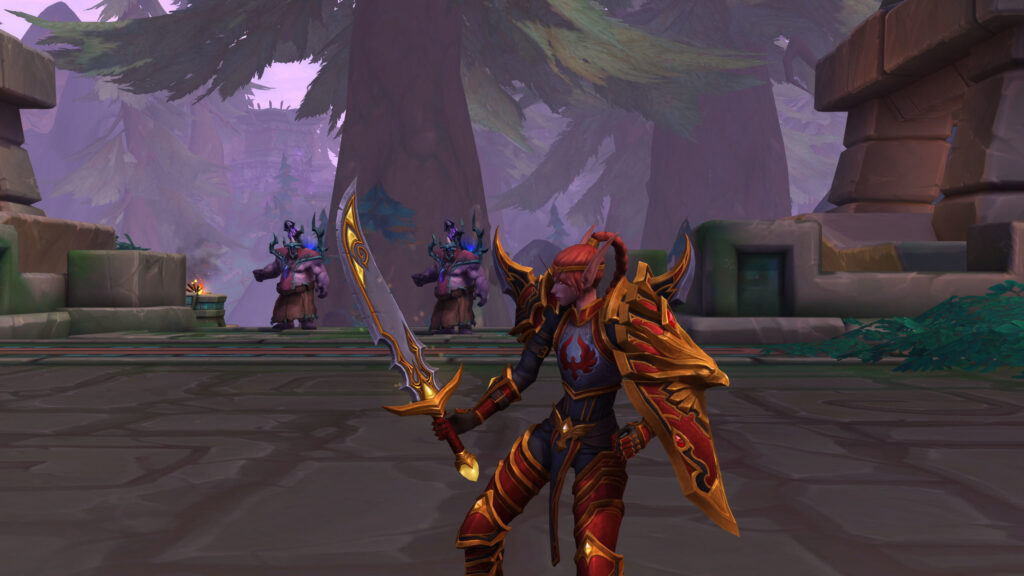
Elite tanks understand Proactive Social Mitigation. A simple “First time tanking this key, pulling steady” at the start of a run acts as a Expectation Buffer. It humanizes you to the group and significantly reduces the likelihood of “flaming” if a mistake occurs. By setting the Social Tone early, you transform a group of strangers into a cooperative unit, effectively neutralizing toxicity before the first pull even begins.
The “Visual Anchor” Technique
To lead without stress, utilize Visual World Markers. Placing a “Skull” on the primary kill target or a “Square” where you intend to pull the next pack provides Non-Verbal Direction. This reduces the mental load on your DPS, as they no longer have to guess your intentions. When the group knows exactly where to look and what to hit, the dungeon moves with Surgical Precision, and the “Tank Lead” becomes an effortless byproduct of clear visual cues.
Conclusion: The Calm Commander
Tanking is not about being the strongest; it is about being the most dependable. By focusing on Pacing, Positioning, and Punctual Communication, you transform the role from a source of stress into a position of Tactical Mastery. You realize that as long as the mobs are facing away and the pace is steady, the group will follow. Stop fearing the flame; start providing the structure. Step into the lead with the confidence of a Steady Anchor and watch as the dungeon bows to your control.


